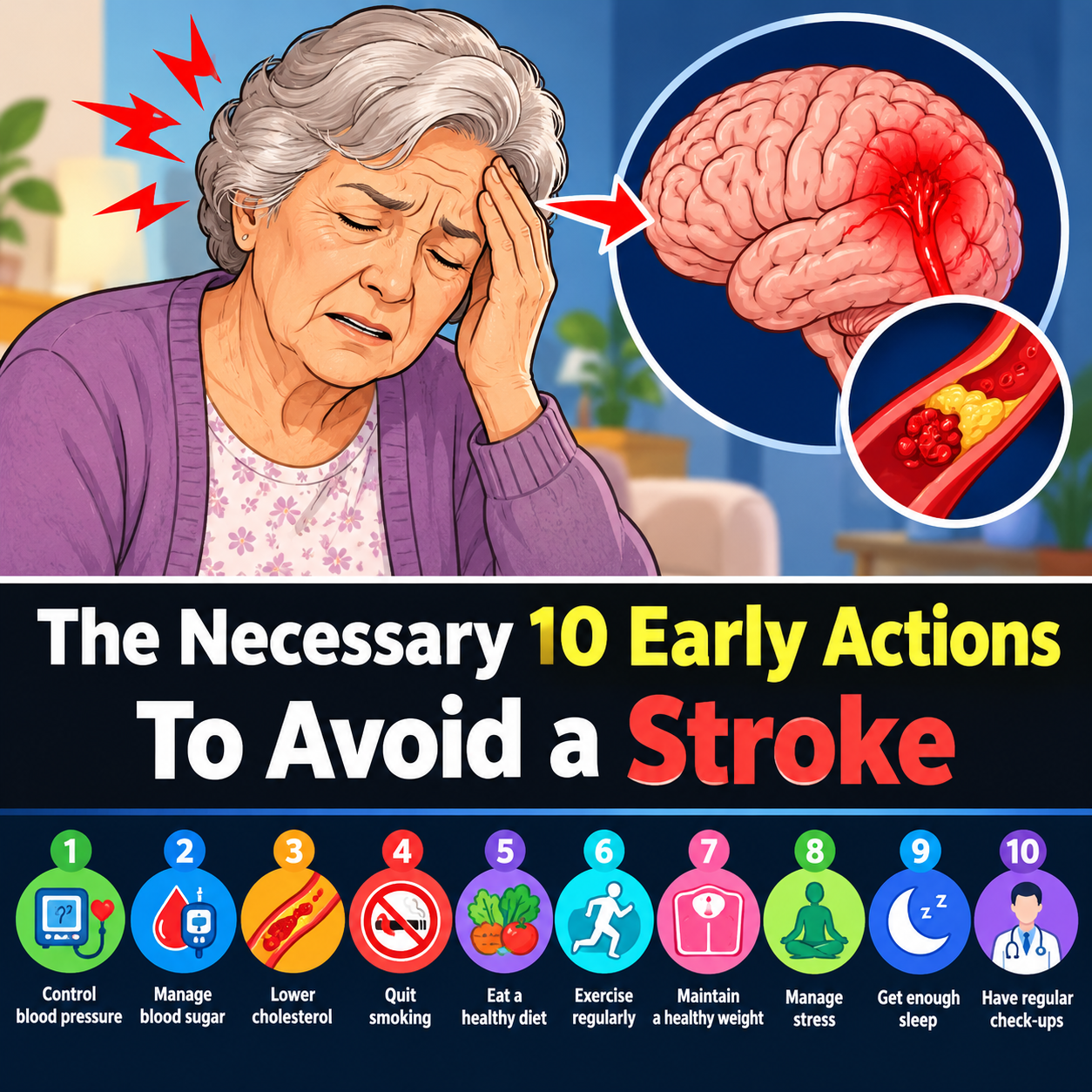
and travel to the brain.
To help protect yourself:
- Attend recommended health screenings.
- Discuss your personal stroke risk with your doctor.
- Take prescribed medication consistently.
- Never stop blood thinners, blood pressure medication, or cholesterol medication without medical advice.
- Ask whether your heart rhythm needs to be assessed.
Preventive care is especially important for older adults and people with a previous stroke or transient ischemic attack (TIA).
Know the Warning Signs of a Stroke
Even if you follow these preventive steps, a stroke can still occur. Recognizing the warning signs and
There’s more to discover. Continue to the next page for the rest of this article.